
The Labor Crisis Nobody Is Talking About: Who Is Actually Building New York
New York City's housing crisis isn't only a question of policy or financing. It's also a question of who’s actually available to build the housing. The labor requirements built into 485-x are only one part of the equation. They come at a time when federal immigration policy has severely affected the labor force available to build housing.
CONTEXT
The Constraint Beneath Everything
In Part 1, we looked at the numbers and saw a market trying to recover, unevenly. In Part 2, we saw how policy is shaping what actually gets built, often in unintended ways.
But both of those stories assume something fundamental: that once a project is approved, it can be built.
That assumption is starting to break down.
THE WORKFORCE
Who Is Actually Building New York City
According to the New York City Department of City Planning, nearly two-thirds of the city's construction workforce is foreign-born. That makes immigration policy a housing issue, too.
That is not a side note, it’s the foundation of the entire system.
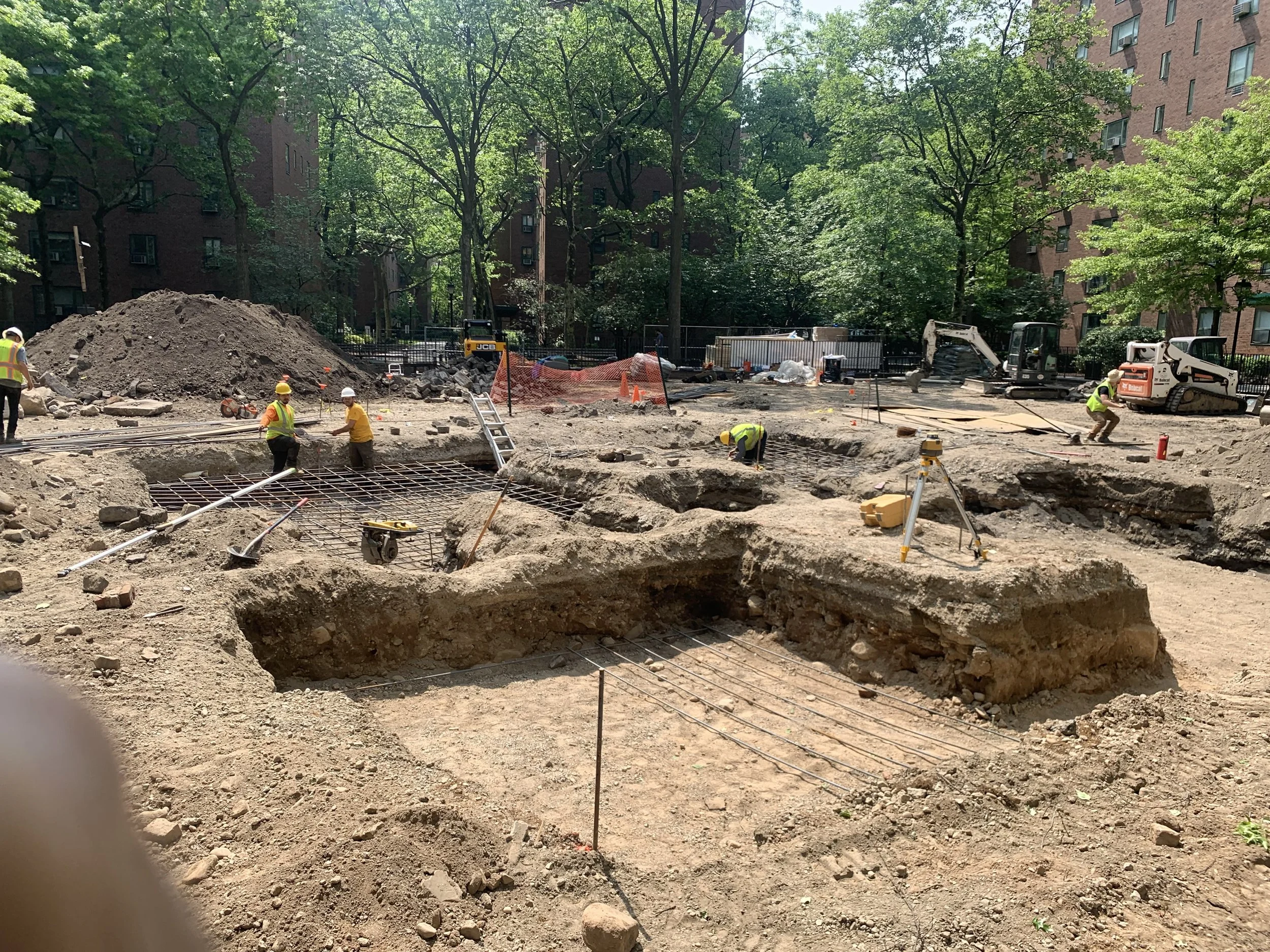
These are the people pouring concrete, framing walls, installing systems, and doing the daily work that turns drawings into buildings. Without them, nothing moves.
Over the past year, that workforce has become less visible and, in many cases, less available.
ON THE GROUND
What We’re Seeing and Hearing
We are hearing from contractors, developers, and consultants that job sites are quieter. Workers are staying home. Day labor pickup locations are less active. Crews are harder to assemble, and when they do come together, they are often smaller than they were even a year ago.
The reason is not complicated. ICE has targeted places where construction workers wait to be picked up for day labor and has conducted enforcement at worksites (Forbes). We are hearing that some workers are avoiding coming to work altogether for fear of being picked up.
The concern extends well beyond New York. In a 2025 industry survey, 28% of construction firms reported being affected, directly or indirectly, by immigration enforcement in the prior six months.
THE COST
What Happens When Construction Labor Disappears
When labor becomes scarce, costs rise. That is true in any industry. In construction, the effects compound quickly.
For developers already trying to make the numbers work, a less reliable labor supply adds another layer of uncertainty.
At a moment when developers are already navigating the loss of 421-a, the complexity of 485-x, and rising interest rates, labor instability becomes another variable that is difficult to predict and even harder to absorb.
The question is no longer only whether a project can get approved or financed. It's whether the workforce will be there to build it.
THE COMPOUNDING EFFECT
Labor and Materials Moving Together
Labor is only part of the story.
Material costs have also been increasing, driven in part by tariffs on imported building components and systems. Mechanical equipment, electrical systems, and basic construction materials are all affected. NAHB — How Tariffs Impact the Home Building Industry
When labor costs rise at the same time that materials become more expensive, the pressures compound.
This is where the math breaks down. With costs increasing at the same time, projects that were already close to the edge stop working entirely.
WHAT THIS MEANS
Capacity Is Not a Given
In Part 2, we looked at how developers are adjusting their projects to fit within policy thresholds. But those adjustments assume that projects can still be built once they are approved.
That assumption is becoming less certain.
If labor remains constrained, even well-structured projects will struggle to move forward. Timelines extend. Budgets expand. Risk increases.
At a certain point, the question is no longer whether a project pencils on paper. It is whether it can be executed in reality.
New York’s housing shortage is often framed as a problem of policy or financing. Increasingly, it is also a problem of capacity.
Looking Ahead
We are seeing this tension play out in our own work.
On Greenpoint Avenue in Brooklyn, we are navigating not just zoning and financing, but the practical realities of assembling a workforce in a changing environment.
In Newark, a second project will add more than 700 units to an area that’s been abandoned for decades. The nearly full-block site will include a nine-story building, with a portion of the apartments set aside as affordable housing.
Both projects are viable. Both are needed.
But neither exists in isolation from the broader conditions shaping the industry.
If we want to build housing at the scale New York requires, we have to be honest about what that takes — not just in policy, but in people.
Next in the series: Part 4 — Who Should Actually Solve This? If the private market cannot deliver housing at the scale we need, what comes next?
Building Studio is a New York City architecture firm with expertise in multifamily and affordable housing development. Learn more at buildingstudio.com/multifamily-architects-nyc.

About the Author
Michael Goldblum is a partner at Building Studio Architects, a New York City based architecture firm specializing in multifamily and affordable housing. With more than 30 years of experience and over 10,000 residential units designed, he has deep expertise in zoning, land use, and navigating complex regulatory environments.