
Who Should Actually Solve This? Rethinking How Housing Gets Built in New York
New York is building more housing than it has in decades. At least on paper.
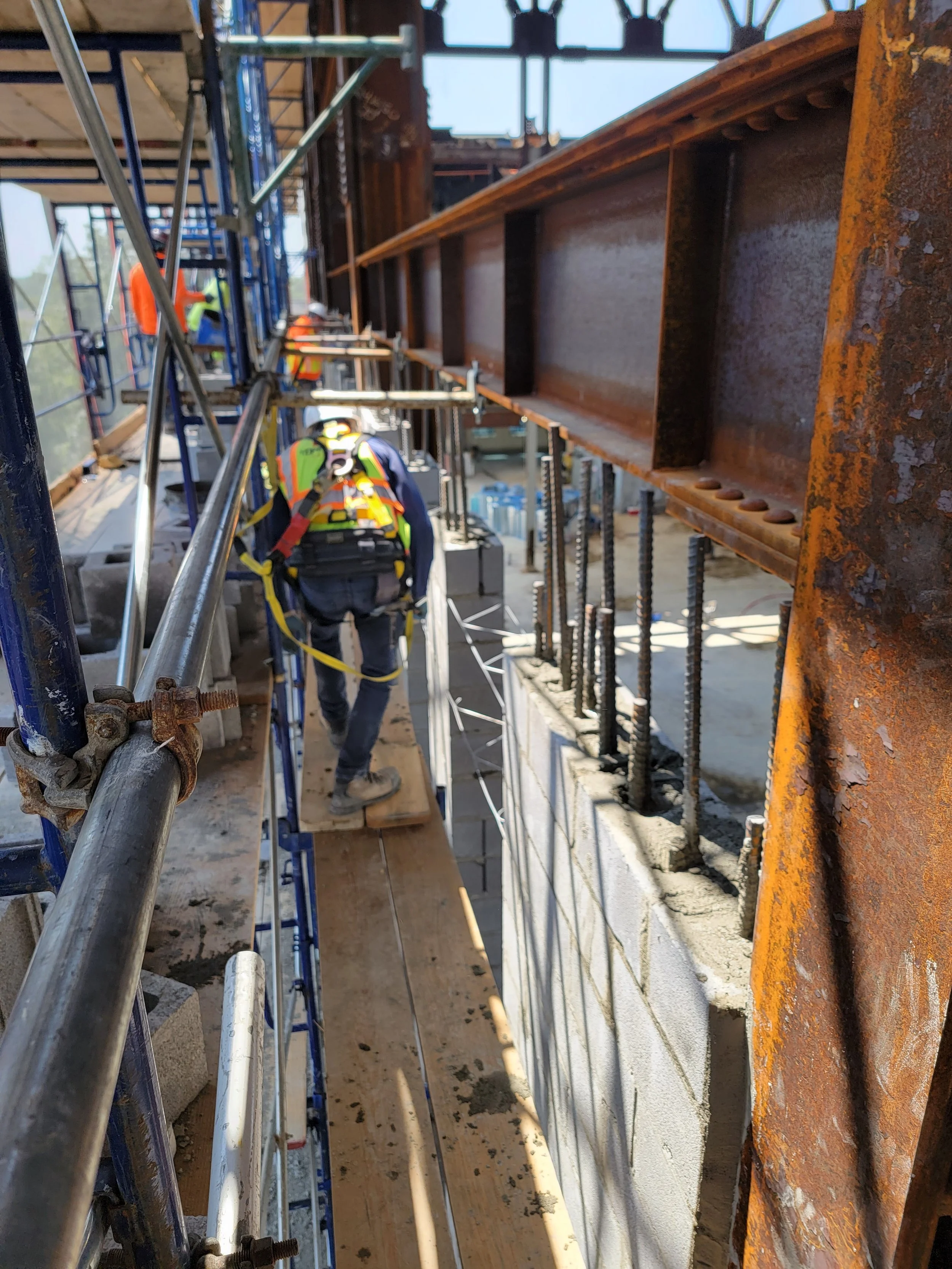
New York’s housing crisis is often framed as a failure of policy.
In Part 1, we looked at the numbers and saw a system struggling to produce enough housing, even in moments of apparent recovery. In Part 2, we saw how well-intentioned incentives are shaping what gets built — sometimes in ways that limit scale. In Part 3, we stepped back to look at capacity itself and the reality that even viable projects depend on a workforce that is becoming harder to sustain.
Taken together, those constraints point to a deeper question.
If the system isn’t producing enough housing, who is actually responsible for fixing it?
THE CHOICE
Public or Private
At its simplest, the answer comes down to two options.
Either the public sector builds housing — funding it, managing it, and owning it — or the private sector is given enough incentive to do so at scale.
For decades, the city has relied primarily on the private market. There is an illustrious if limited history of nonprofit housing development, but it is not currently in wide use. Programs like 421-a, and now 485-x, are designed to bridge the gap between what it costs to build housing and what the market can support.
Sometimes they work. Often, they fall short.
A Model We Already Have
The Case For Public Housing
More than half a million New Yorkers live in public housing today. Another quarter million remain on waiting lists, often for years. That system is imperfect. Maintenance issues persist. Security remains a concern. The scale of investment required to repair and expand it is significant. But it does something the private market cannot.
It removes the question of profit.
Public housing aligns housing production with public goals, rather than financial returns.
From a purely rational standpoint, it offers clarity. If the city needs more housing, it builds more housing. The challenge is not whether it works in theory. It is whether there is political and cultural appetite to pursue it at scale.
THE REALITY
Why We Default to the Market
For all its limitations, the private development model remains the dominant approach. That is not because it is working particularly well. It is because it is familiar, it pushes the apparent majority of the investment away from public funds, and because it distributes responsibility across many actors rather than concentrating it in government.
But the constraints we have already outlined: policy thresholds, labor shortages, rising material costs, are making that model harder to rely on. A recent RAND study (pdf) puts it plainly:
“The costs of producing, operating, and paying taxes on multifamily housing remain prohibitively high for most prospective developments… rents in many parts of the city are not high enough to meet the expected return needed for housing development to occur.”
This is not a story about unwillingness. It is a story about feasibility.
Beyond Incentives
What “Working With Developers” Actually Means
If New York is going to continue relying on private developers, then the question is not whether to incentivize them. It is how. Incentives cannot exist in isolation. They have to account for the full cost structure of building, primarily labor, materials, financing, regulatory complexity, and time.
You cannot ask the private sector to deliver more housing while making it more expensive to build at every stage.
This is where many policies begin to conflict with one another. Efforts to improve wages, increase affordability requirements, and raise building standards are all individually justified. Together, they can produce a system where fewer projects move forward at all.
A New Variable
A Changing Political Landscape
As of January 2026, New York City has new leadership. Mayor Zohran Mamdani took office on a platform that emphasized both pro-housing and pro-immigrant policies; two issues that are deeply connected to the questions raised throughout this series. That creates an opening.
Not for a single solution, but for a more honest conversation about tradeoffs. About what it actually costs to build housing. About what outcomes the city is willing to fund directly, and what it expects the private market to deliver. Policy does not exist in a vacuum. It reflects priorities. The question now is whether those priorities will align with the realities on the ground.
LOOKING AHEAD
We are working within these constraints every day. On Greenpoint Avenue in Brooklyn, we are designing a multifamily project that depends on the City of Yes zoning changes to make it viable, while navigating the cost pressures that come with today’s labor and material environment.
In Newark, we are part of a nine-story development that will bring more than 700 units to a long-neglected site. This project only works because the conditions around it are different.
Both projects are moving forward. Both are needed. But neither represents an easy or repeatable model at the scale New York requires. If we are serious about solving the housing crisis, we have to move beyond simple narratives. Developers are not the problem. Policy alone is not the solution. And the market, left to its own devices, is not delivering what the city needs.
The real work is in aligning all three. Public goals, private incentives, and the actual cost of building working together in a way that produces housing at scale is what the city needs. That alignment does not exist yet. The question is whether we are willing to build it.
Building Studio is a New York City architecture firm with expertise in multifamily and affordable housing development. Learn more at buildingstudio.com/multifamily-architects-nyc.

About the Author
Michael Goldblum is a partner at Building Studio Architects, a New York City based architecture firm specializing in multifamily and affordable housing. With more than 30 years of experience and over 10,000 residential units designed, he has deep expertise in zoning, land use, and navigating complex regulatory environments.